
South Bank London: A Riverside Guide
South Bank is one of London’s easiest areas to enjoy on foot: riverside views, the London Eye, bridges, cultural venues, food stops, and a relaxed route along the Thames.

South Bank is best when you do not rush it. Walk slowly, pause often, and let the river guide the day.
Late morning, afternoon, or golden hour for river views and a relaxed atmosphere.
Westminster Bridge → London Eye → Southbank Centre → Waterloo or Blackfriars.
River walks, families, first-time visitors, food stops, photos, and rainy-day breaks.
Only visiting the London Eye and missing the wider riverside walk.
What to see on the South Bank
South Bank works best as a walking area. The main sights are close together, but the value is in the river views, small stops, and easy pace.
London Eye
The London Eye is the area’s most recognisable landmark. Even if you do not ride it, the area around it gives you great river views and a strong sense of arrival.
Thames Riverside Walk
The riverside path is the real reason South Bank works so well. Walk slowly from Westminster Bridge toward Southbank Centre, stopping for views, photos, or coffee.
Southbank Centre
Southbank Centre is useful even if you are not attending an event. It gives the area an indoor anchor, with coffee, toilets, cultural spaces, and shelter if the weather changes.
River Views Toward Westminster
Some of the best views of Parliament and Big Ben are from the South Bank side of the Thames. This is why the area pairs naturally with Westminster.
Optional Walk Toward Borough Market
If you still have energy, keep walking east along the river toward Blackfriars, Tate Modern, Shakespeare’s Globe, and Borough Market.
From Westminster Bridge to London Bridge
The South Bank London visitors know best is a single traffic-free riverside path, and the easiest way to see it is to walk it in one direction. Starting at Westminster Bridge and heading east keeps the main sights in order, with the river and the skyline of the City across the water the whole way.
London Eye and County Hall
The big wheel sits beside the old County Hall. A full rotation takes around half an hour, so book a timed slot.
Southbank Centre
Concert halls, terraces and the second-hand book stalls under Waterloo Bridge.
National Theatre
Plays across three stages, plus a free foyer, bookshop and riverside café.
Tate Modern
Modern art in a former power station, with paid special exhibitions and free views from the upper levels.
Shakespeare's Globe
A reconstruction of the open-air Globe Theatre on Bankside, with guided tours and summer performances.
Borough Market
London's famous food market beside Southwark Cathedral, a few minutes from London Bridge station.
Which Station to Use
Four stations serve this stretch of the river. Pick the one closest to where you want to start, not just the nearest on the map.
Waterloo
Waterloo station is the closest for the London Eye and the Southbank Centre. Follow the signs for the South Bank and you reach the river in a few minutes.
Westminster
Cross Westminster Bridge from the Parliament side. It adds the classic view of Big Ben to the start of your walk.
Blackfriars
Blackfriars station stretches right across the Thames, with an exit on the south bank that drops you onto Bankside near Tate Modern.
London Bridge
The best station for Borough Market, Southwark Cathedral and the eastern end of the walk.
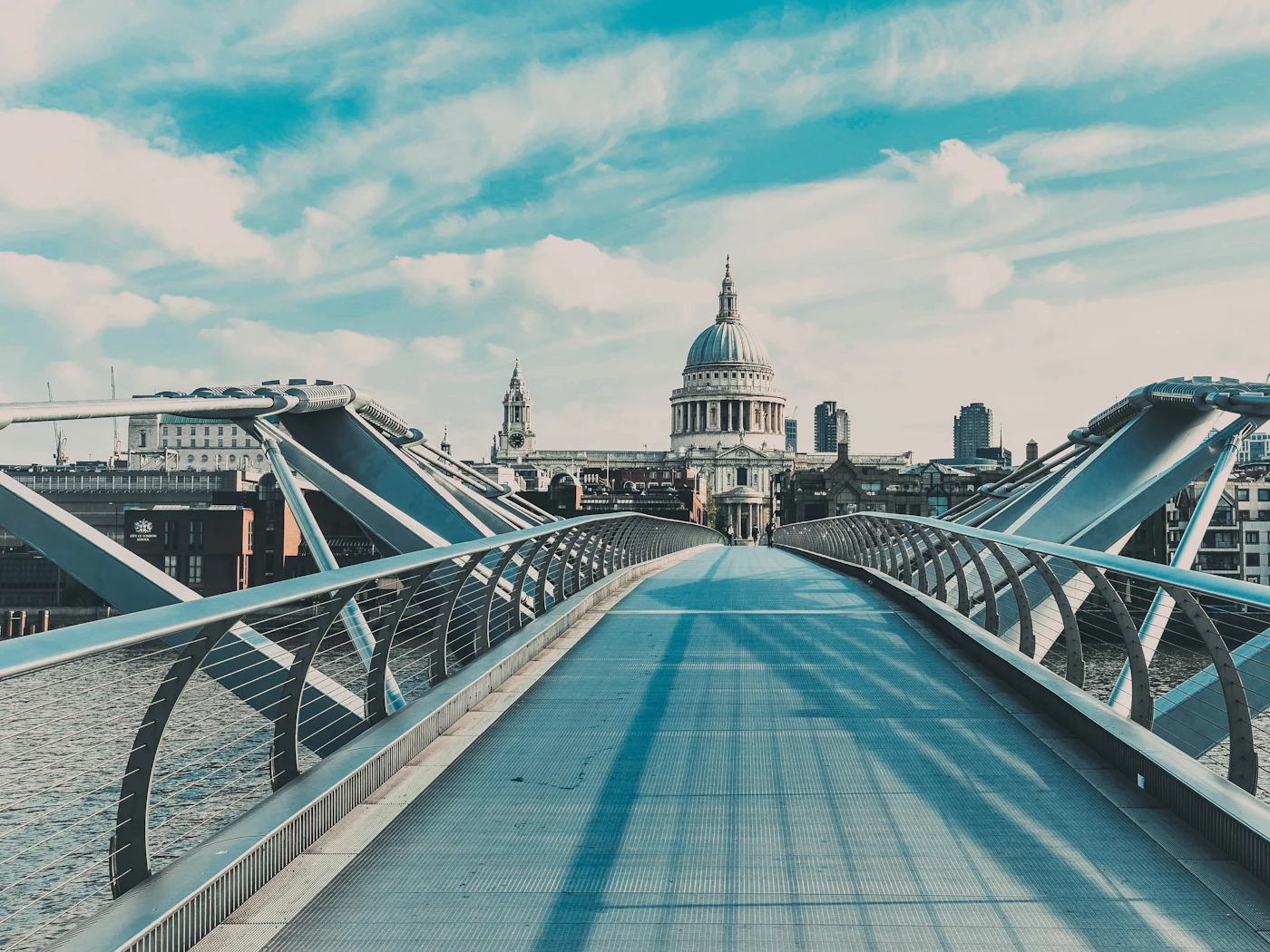
The Millennium Bridge Detour
Opposite Tate Modern, the steel Millennium Bridge carries walkers straight across the Thames to St Paul's Cathedral. It is the best way to link the South Bank with the City of London, and the view of the dome as you walk towards it is one of the most photographed in the capital.
Return the same way, or continue east through the City towards the Tower and pick up the river again at London Bridge.
Before You Go
Practical answers for planning a visit. The riverside also features in our 3-day London itinerary.
What is the difference between the South Bank and the Southbank Centre?
The South Bank is the whole riverside area between Westminster Bridge and London Bridge. The Southbank Centre is one arts complex within it, home to the Royal Festival Hall and other venues.
Is the South Bank free to visit?
Walking the riverside is free, and so are the Tate Modern collection, the Southbank Centre's public spaces and browsing Borough Market. The London Eye, theatre shows and Globe tours need tickets.
When is the best time to walk it?
Late afternoon into early evening, when the light falls on the City across the river and the restaurants and bars along the route start to fill.
Is the walk suitable for buggies and wheelchairs?
Much of the riverside path is wide and flat, but some sections and bridge approaches include steps. Check accessible routes with TfL and each venue before you go.
Best ways to use South Bank in your trip
For your first London day
Start in Westminster, cross Westminster Bridge, then follow the South Bank path. It gives you an easy first-day route without needing too much Tube hopping.
For a rainy day
- Use Southbank Centre as an indoor stop.
- Keep the walk flexible.
- Pair the area with nearby museums or galleries.
- Pause often instead of forcing a long walk.
For a longer walk
Continue east toward Tate Modern, Shakespeare’s Globe, Millennium Bridge, and Borough Market. This turns South Bank into a half-day riverside route.

Let the river set the pace.
South Bank is not a checklist area. It is a place to walk, pause, watch the city move, and enjoy London from the water’s edge. Give it more time than you think.
Walk From WestminsterRelated London guides
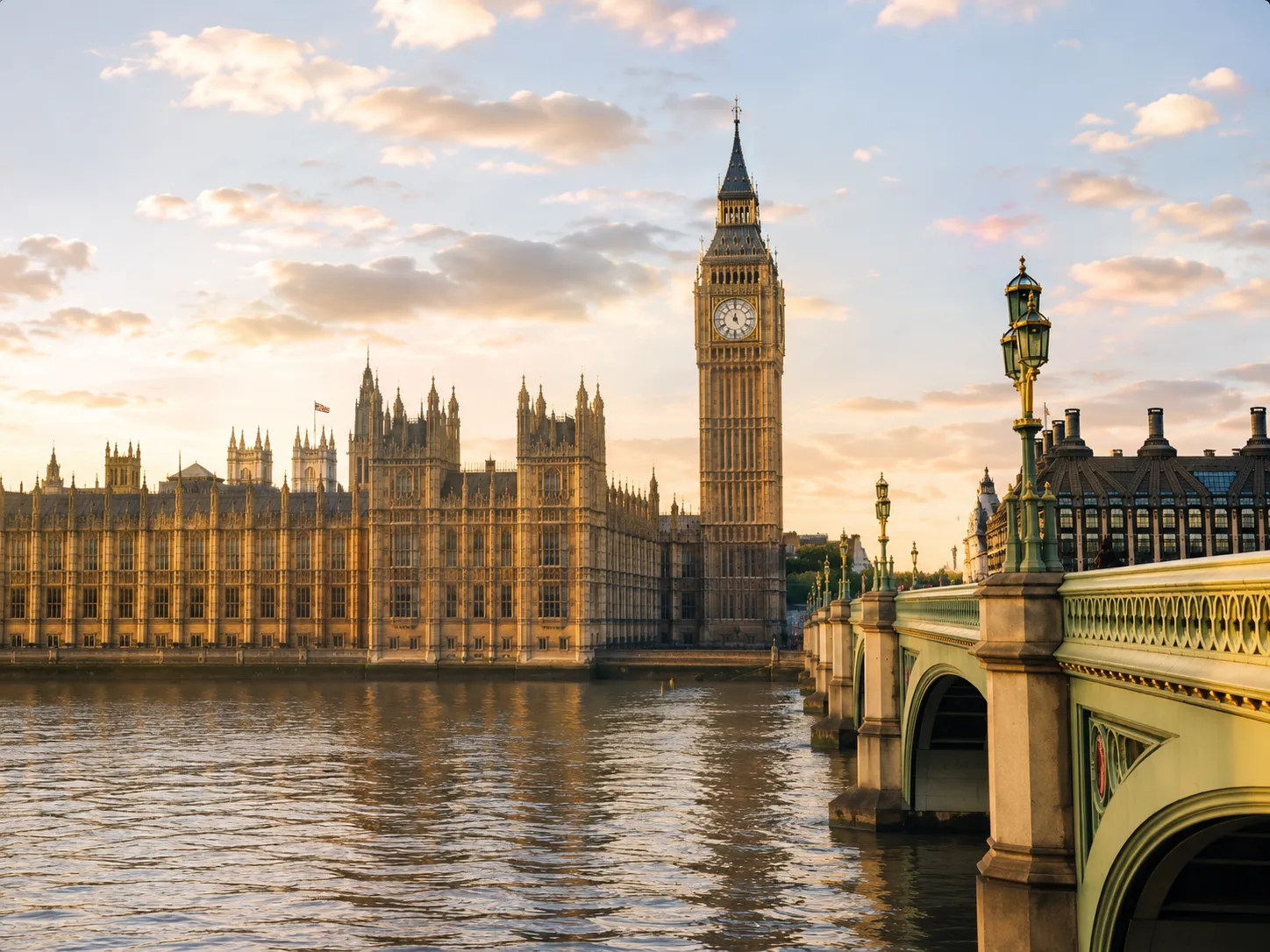
Westminster Guide
Pair South Bank with Big Ben, Parliament, Westminster Abbey, and royal London.
View Guide →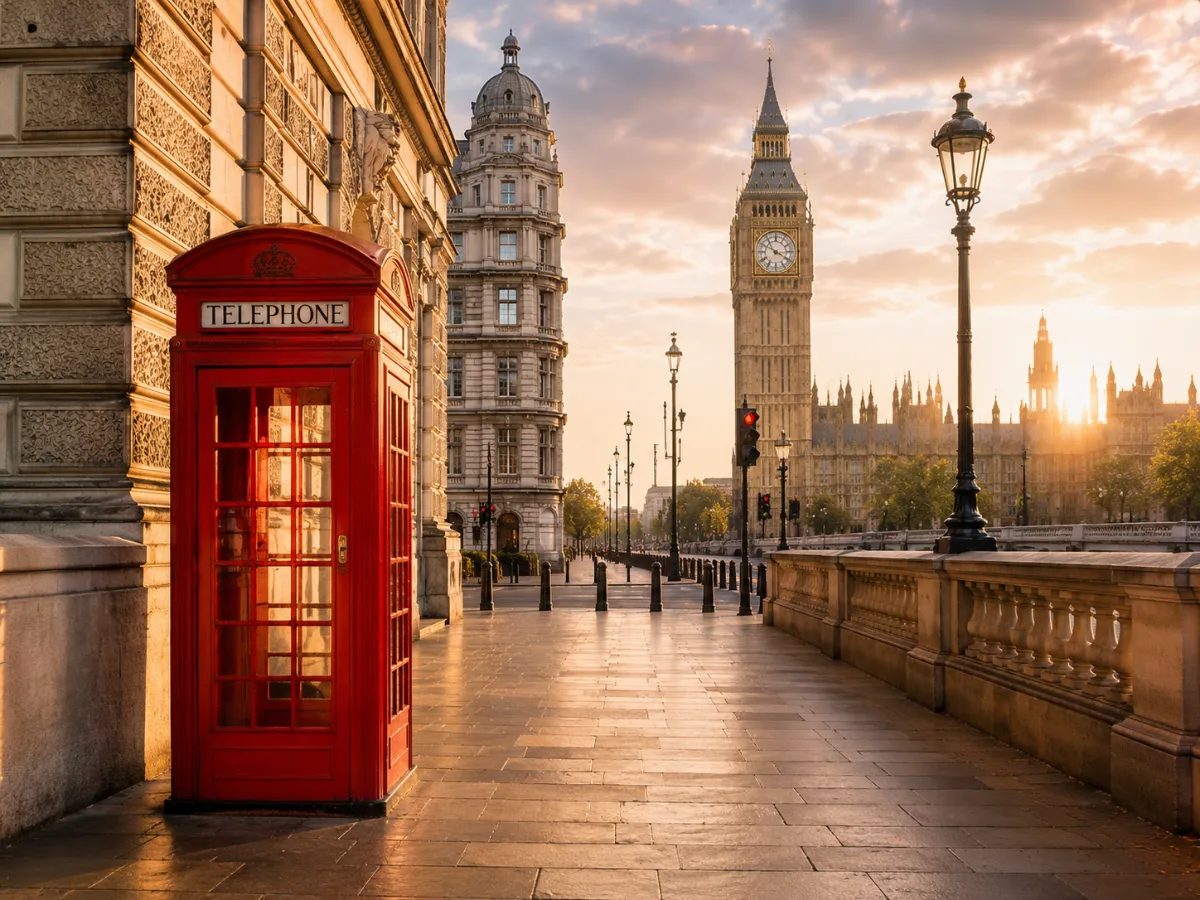
Westminster to South Bank Walk
Follow a simple riverside route from Westminster to the South Bank.
View Walk →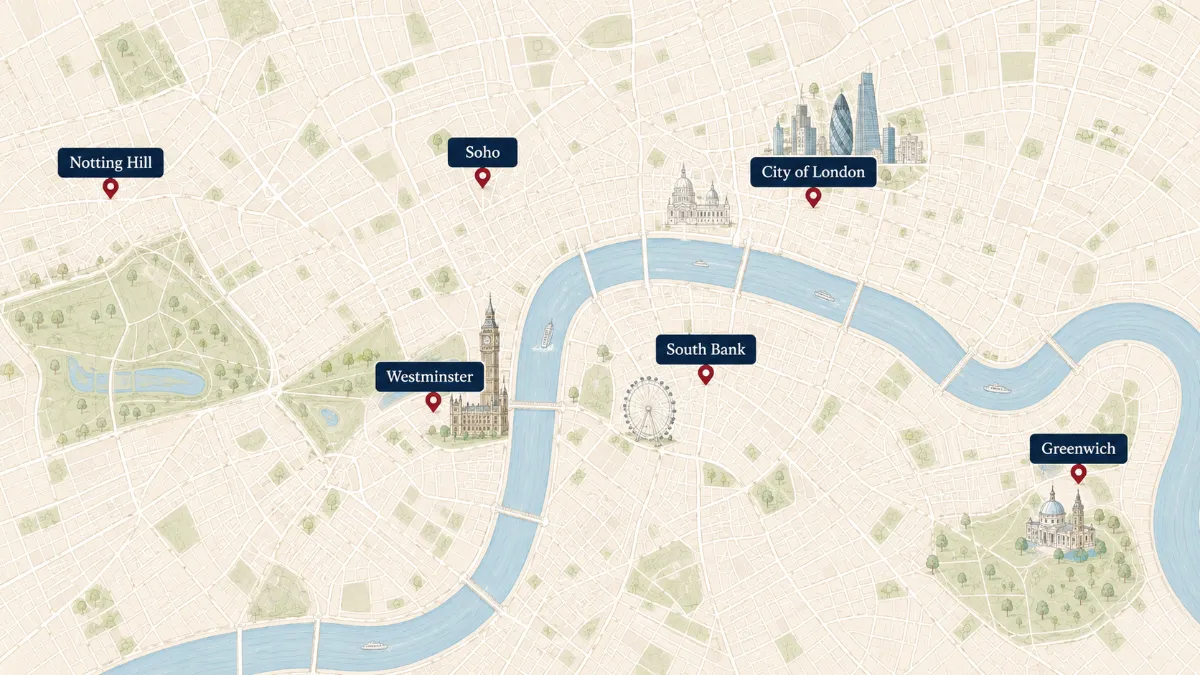
Interactive London Map
Use the map to plan South Bank with nearby attractions and food stops.
Open Map →